A yellow leaf can make it tempting to add fertiliser or water immediately. First, collect a few observations. Watering problems, growing conditions, pests and diseases can produce overlapping symptoms, so colour alone does not tell you the cause.
1. Notice where the yellowing starts
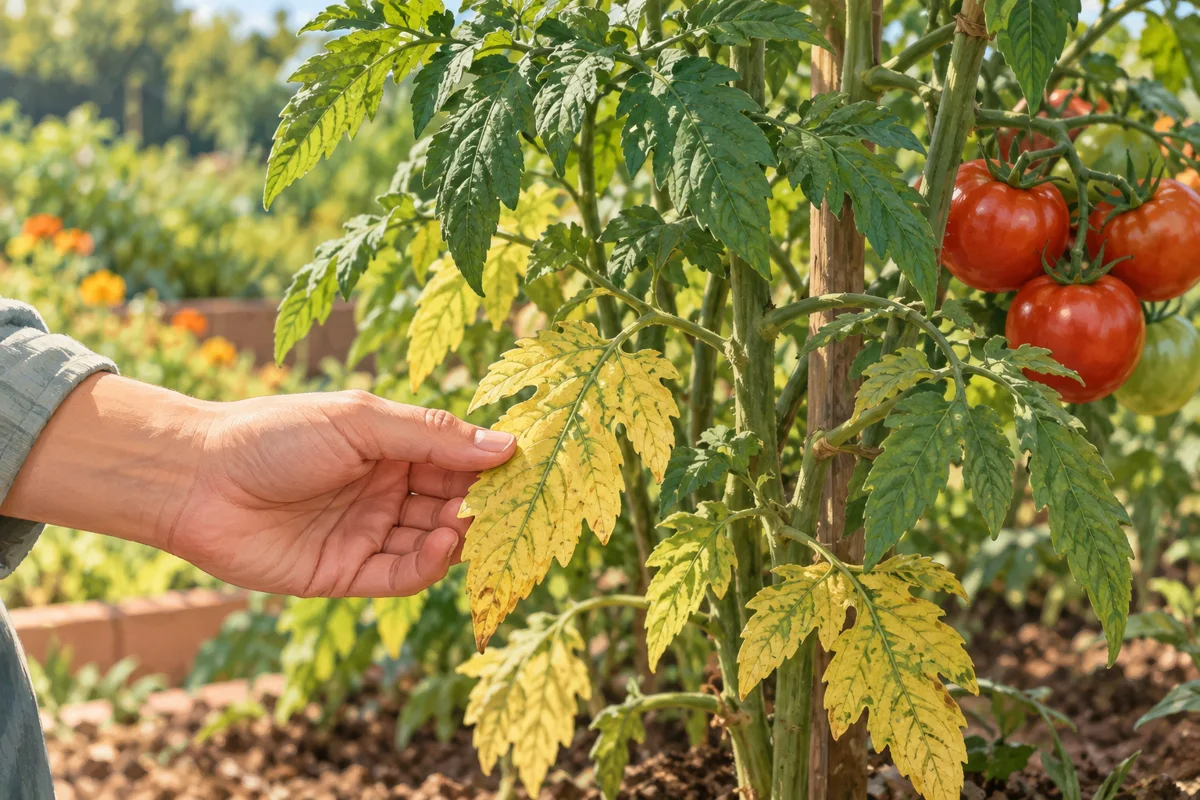
Are only the oldest lower leaves affected, or is new growth changing too? Is the whole leaf pale, or is the yellowing between the veins? Are there spots, distorted leaves or wilting? The RHS leaf-problem guide explains that temperature, nutrition and growing conditions can affect tomato foliage as well as pests and diseases.
Write down when you first noticed the change. Photograph the whole plant, an affected leaf and the underside of that leaf. Keep the original images to compare later; a close-up alone loses the pattern across the plant.
2. Check moisture and drainage
Before adding water, inspect the growing mix and the container’s drainage holes. Does the mix remain wet, or does it dry rapidly? Is water collecting under the pot? Review recent watering and rain together.
Penn State’s plant-health guide lists several possible explanations for older leaves yellowing, including nutrient problems, overwatering, ageing and restricted roots. This is why the next useful step is checking conditions, not choosing a cure from the colour alone.
3. Review recent changes
Note any recent repotting, move outdoors, hot or cold spell, or fertiliser application. Include the product name and amount if you fed the plant. RHS guidance recommends avoiding irregular watering; do not respond to a dry plant by suddenly flooding it.
Avoid changing watering, feeding and pruning all at once unless a clearly identified problem requires it. A short record makes it easier to see which change helped and to describe the history to someone advising you.
4. Look beyond yellow colour
Check both leaf surfaces and the stems. Spots, lesions or a pattern spreading between plants deserve closer attention. University of Maryland Extension describes bacterial leaf spots that may occur with yellowing and leaf loss. These signs do not prove that your plant has that disease; they show why more than one feature matters.
If symptoms spread quickly, the whole plant wilts, or you cannot identify the cause, contact a local plant clinic or agricultural adviser. Share the photographs and care history. Do not apply a pesticide simply because a leaf is yellow.
Ask a question with enough context
A useful question might be: ‘My tomato is in a container on a sunny balcony. The lower leaves started yellowing three days ago. The growing mix still feels damp, and I watered yesterday. There are no obvious spots. What should I check next?’
SensoFarm’s AI assistant can help you organise growing questions and ask for more details. Its suggestions are a starting point for checking the plant, rather than a confirmed laboratory diagnosis. Learn how to start with the app.
Further reading
Penn State Extension: diagnosing poor plant health
University of Maryland Extension: bacterial diseases of tomato