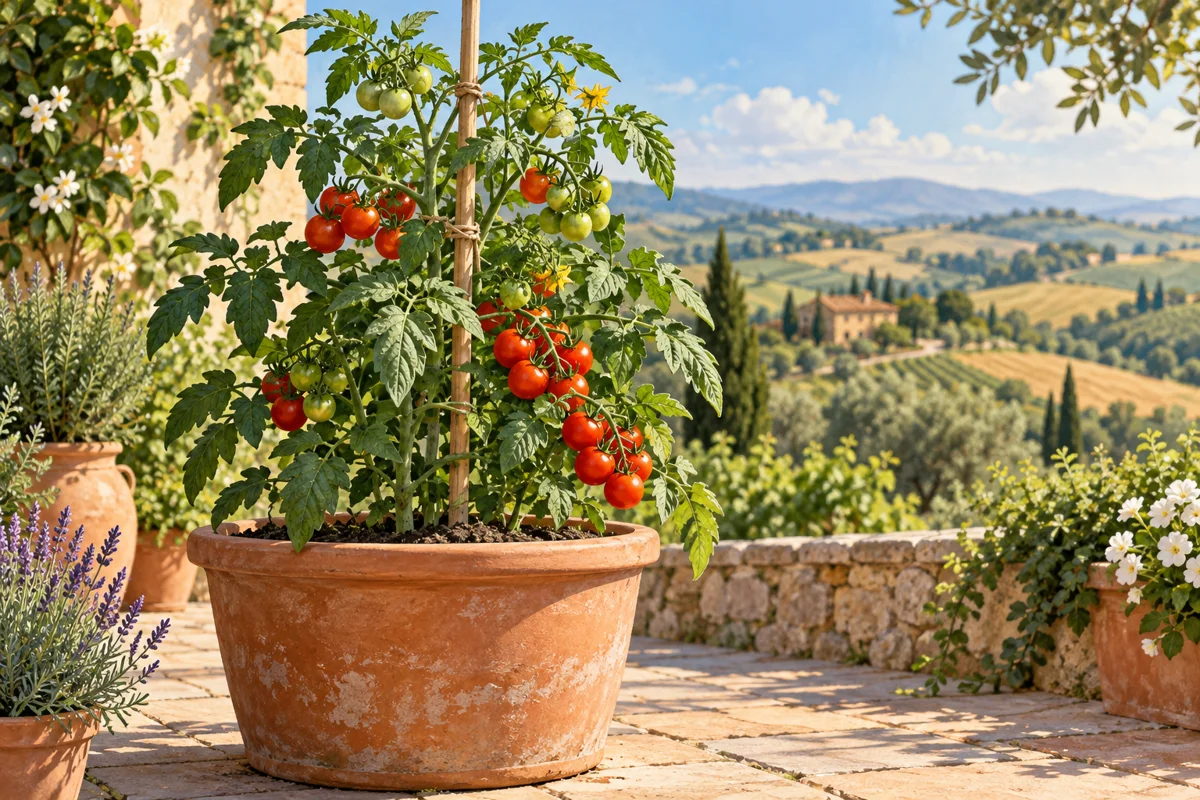
You do not need a large garden to grow tomatoes. A container can be a manageable first project, provided the variety, pot and location suit each other. Start with one plant you can check regularly, then use what you learn to plan the next season.
Choose the plant before choosing the pot
Read the plant label for its growth habit and mature size. Compact bush or dwarf varieties are convenient for small spaces. Tall cordon varieties need more support and training. A label that says ‘cherry tomato’ describes the fruit, not necessarily a small plant.
The RHS tomato guide distinguishes bush and cordon types. Keep the variety name with your notes so advice about pruning and support matches the plant you actually bought.
Give the roots room and drainage
Choose a container with open drainage holes and a potting mix intended for containers. The RHS suggests a pot 30–45 cm across for one tomato plant. Treat that as a starting point and check the variety’s requirements. A small nursery pot is not a permanent home for a large plant.
Set up any stake or cage when you plant. It is easier to do before the stems are heavy with fruit. Keep the container somewhere accessible: if watering means moving furniture every day, caring for it becomes harder.
Find a sunny, sheltered place
Tomatoes need a warm, frost-free growing season and full sun. University of Minnesota Extension recommends planting outside after frost danger has passed and the soil has warmed. Its calendar dates are local to Minnesota, so use your own local frost guidance rather than copying a month from another climate.
If a young plant has been indoors, introduce outdoor conditions gradually. Check the site at different times of day; a bright room or balcony is not always a place that receives direct sun.
Water the growing mix, then check again
Container plants can dry quickly, particularly in hot weather. Check the moisture before watering rather than assuming every day is the same. Water the growing mix thoroughly and allow excess water to drain. Minnesota Extension recommends avoiding overhead sprinkling and keeping moisture consistent.
Follow the feeding instructions for your potting mix and tomato fertiliser. More fertiliser is not automatically better: excess nitrogen can encourage leafy growth at the expense of fruit. Write down what you apply so you can explain the routine if a problem appears.
Make a short growing record
Record the variety, planting date, container size and hours of direct sun. Take a photograph from the same position each week. If something changes, compare it with earlier notes instead of changing several care practices at once.
You can set up your first crop in SensoFarm and read its suggested care steps. If leaves change colour, use our yellow tomato leaf checklist to gather useful observations before asking a question.
Further reading
University of Minnesota Extension: growing tomatoes in home gardens